
A Steadfast Commitment to Lake Stewardship
Our Initiatives help prevent pollution, improve fishing, ensure responsible development and strengthen long-term conservation efforts demonstrated by a series of impressive community volunteer initiatives over 37 years.
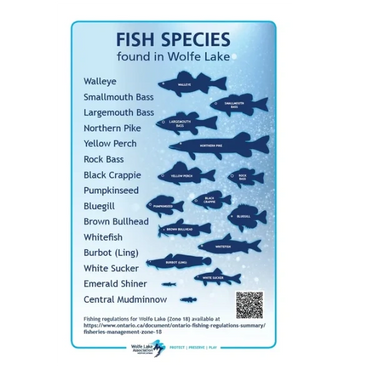
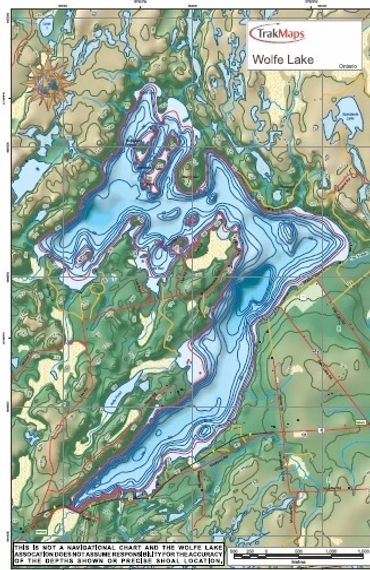
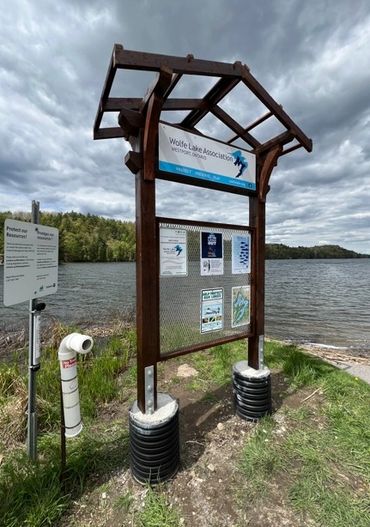
Three New Boat Launch Signs - BEFORE AND AFTER



Helping Loons Thrive
Over the past decade, there have been only a few documented loon chicks successfully hatched and fledged on Wolfe Lake. In hopes of facilitating loon nesting success, the WLA has placed a nesting platform on the lake and for the past three years, the couple has produced five chicks.
Loons face many threats, including lead toxicity and habitat loss. Their eggs and chicks are especially vulnerable to predation, being swamped by boat and jet-ski wakes or run over by these watercraft. Please resist the temptation to linger or move closer to these platforms. Loons may abandon eggs under the pressure of humans.

Let's Get The Lead Out
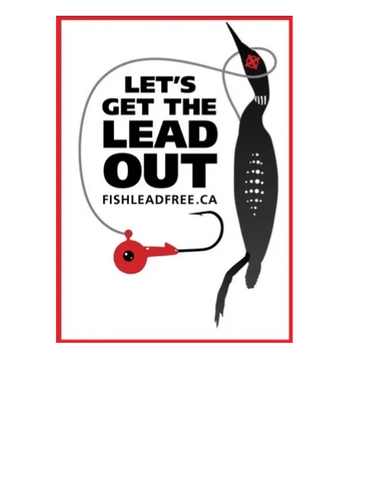
In 2022, the Wolfe Lake Association (Westport) introduced “Let’s Get the Lead Out,” a
grassroots initiative that encourages anglers to switch to lead-free fishing tackle. The
initiative was created in response to the sobering fact that lead poisoning (from ingested fishing tackle) is the number one killer of Common Loons. Since its launching, Let’s Get the Lead Out has collected over 500 pounds of lead, and the initiative continues its important work today. Why? Because an estimated 545 tonnes of lost lead sinkers and jigs continue to accumulate in Canada’s waterbodies every year, representing the most significant source of lead released into Canadian waters. Biologists assure us that by reducing the accumulation of toxic lead in the environment, we are helping protect our lakes and our loons.
Toxins In Your Tackle Boxes

Tree Bundle Fish Habitat Enhancement
A partnership reprise fueled another environmental project, this time submerging tree bundles to enhance fish and wildlife habitat. The wood was sunk in locales previously identified by the RVCA as being advantageous yet safe. Submerged wood attracts many fish species and their young of the year, as well as turtles, herons, kingfishers, dragonflies, and invertebrates. We continue to monitor the sites with underwater cameras and are pleased to report its working!
Restoring A Natural Fish Habitat - Twin Culvert Upgrade
The WLA, through a generous donation from the Alastair and Diana Gillespie foundation, contributed $1500 towards the cost to replace two failing 4-foot culvers on private property along Scanlan Creek with twin 5-foot culverts. Installed last summer, the wider pipes may encourage cautious walleye to travel through to historically significant spawning habitat.

Scanlan Creek Walleye Spawning Habitat Restoration
According to a recent Watersheds Canada media release, scant snowfall over a relatively easy winter and continued below-average precipitation this spring resulted in area creeks flowing well below normal. The lack of depth has translated to very poor walleye recruitment at various spawning bed rehab sites. While this is indeed disappointing, we cannot control Mother Nature and must once again look ahead to next year with fingers crossed.
Partners & Sponsors
Partners:
- Westport Outdoor Area Association (WAOA)
- Rideau Valley Conservation Authority
- Camp IAWAH
- Scanlan Creek Private Property Land Owner
Sponsors:
- Toronto Dominion Friends of the Environment Foundation $4470
Wolfe Lake Association Project Lead & One of Several Volunteers
- Margie Manthey
Concerns Of Low Water Levels Continue
Parks Canada alters water levels of reservoirs keeping in consideration of public safety, the environment, fishery and navigation along the Rideau Canal from Kingston to Ottawa. In response to several questions regarding the depletion of the Wolfe Lake, Parks Canada reported they are guided by old legislation. Parks Canada admitted that low water levels could happen again to maintain the 5' draft for marine traffic. Parks Canada also advised us that modifications to the Dam is not allowed because it is an historic structure.
Water levels in 2025 are much lower than usual!
MINING AND PROPERTY OWNER RIGHTS
Bedford Mining Alert
News Letter Mining Alerts & Updates
News Letter Mining Alerts & Updates

Mega Graphite Inc. and The Ministry of Northern Development and Mines has taken over 40 mining claims in the Bedford and Burgess Townships
News Letter Mining Alerts & Updates
News Letter Mining Alerts & Updates
News Letter Mining Alerts & Updates
Wolfe Lake Eagles
Excerpt From 2003 News Letter by Duncan MacDougall
Next to the mournful call of a loon, perhaps nothing epitomizes our northern wilderness more than the sighting of a Bald Eagle, Since I started spending part of my summers on Wolfe Lake in 1950, I can recall only 2 or 3 years that we have not had a pair of eagles nesting on or near our lake.
Eagles are extremely shy, especially while nesting, and will abandon a nest if they are disturbed. When observing them, use binoculars and don't approach closer than 400 metres (a quarter mile). When passing by their nest, don't stop your boat. As long as it is not too close, they will tolerate a moving boat that has invaded their "comfort zone", but as soon as it stops, or slows down, they become agitated.
News Letter 2010 - pages 16 - 17, Southern Ontario Bald Eagle Monitoring Program

Algonquin land claim
Letters to and from Negotiators
South Frontenac Township impose on rights of property owners
South Frontenac Township - 30 Metres Of Controversy
Vigorous debate over changes to rules for existing buildings located close to water bodies in South Frontenac. Read More
by Jeff Green and Wilma Kenny | Apr 27, 2016

Eurasian Milfoil

Eurasian Milfoil Library
WLA News Magazine Article 2019 Eurasian Water Milfoil - A Nasy Invader
WLA News Magazine Article 2019 Eurasian Water Milfoil - Methods of Eradication
Updates on the Eurasion Milfoil from the AGM, July 25, 2015
Note from Paul Thompson, July 2015.
Aeration method to control milfoil by Clean-Flo Engineered Aeration
Use of Jute to control milfoil, Lake Lovering project
2008 Statewide Strategic Plan for Eurasiona Watermilfoil in Idaho